
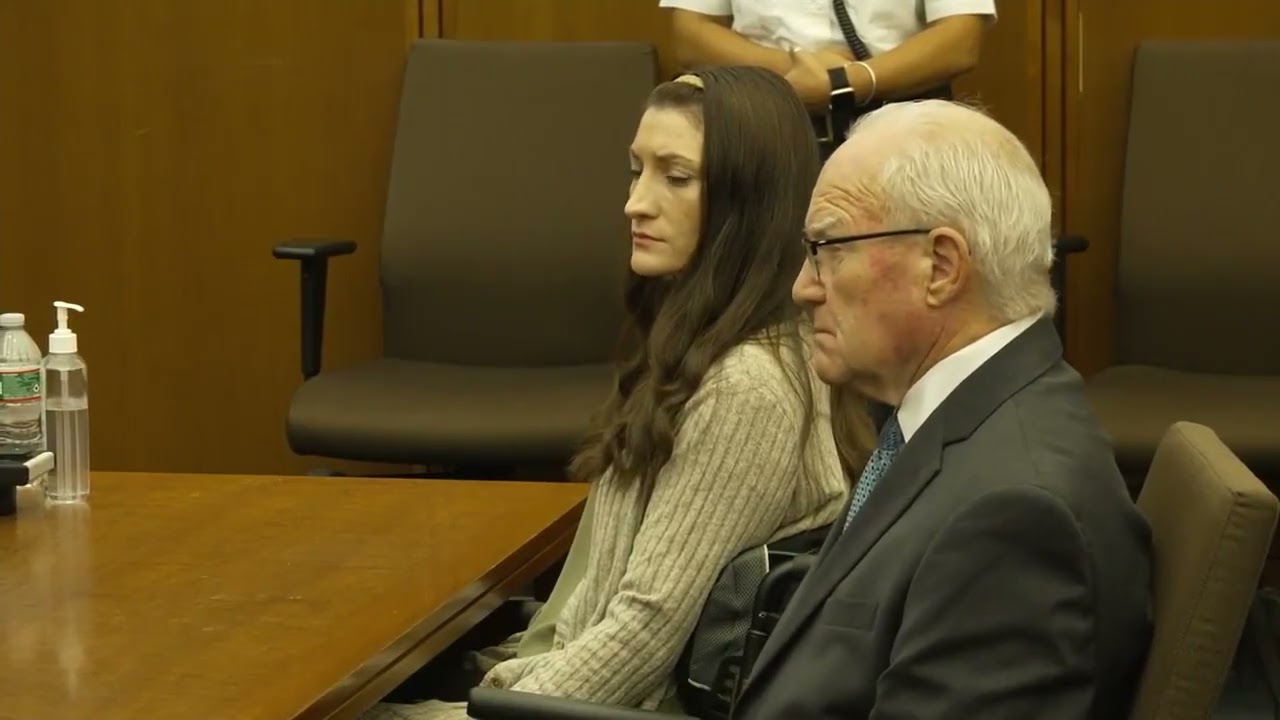

The agonizing wait continues in the trial of Massachusetts mother Lindsay Clancy, as jurors ended Tuesday without reaching a verdict in a case involving the deaths of her three young children.
The nine-woman, three-man jury will return Wednesday after asking to recess for the evening. Earlier Tuesday, jurors told Judge William Sullivan that they could not reach a unanimous decision. Sullivan instructed them to continue deliberating, pointing to the enormous amount of evidence presented during the nearly six-week trial in Plymouth Superior Court.
That was the first public indication that the jury had reached an impasse, which isn’t exactly surprising considering what these 12 people are being asked to decide.
Clancy, 36, faces three counts of first-degree murder in the January 2023 deaths of her children, Cora, 5, Dawson, 3, and Callan, just 8 months old.
There is no dispute over whether Clancy killed the children. She acknowledges strangling them with exercise bands in the basement of the family’s Duxbury home. The central question is whether she was criminally responsible for those actions.
Clancy has pleaded not guilty by reason of lack of criminal responsibility. Her defense maintains that postpartum psychosis had left her unable to understand that what she was doing was wrong or unable to conform her behavior to the law.
That’s an enormous distinction, both legally and morally, and the jury has a mountain of evidence to sort through.
More than 80 witnesses testified and roughly 300 exhibits were introduced during the trial. The defense presented evidence detailing Clancy’s worsening anxiety, paranoia and suicidal thoughts after Callan’s birth. Jurors heard that she sought mental health treatment repeatedly, took numerous psychiatric medications and spent several days receiving treatment at a psychiatric hospital before the killings.
Her mother and sister described changes they witnessed in her behavior. Defense experts testified that Clancy was psychotic at the time of the killings, and her attorneys argued that she heard a voice telling her to kill the children.
Prosecutors painted a very different picture.
They argued Clancy understood exactly what she was doing and deliberately created an opportunity to be alone with the children by sending her then-husband, Patrick Clancy, out to get medication and takeout.
A prosecution expert concluded that Clancy killed the children as part of a plan to end her own life because she did not want to leave them behind. Other witnesses testified that they had not observed signs of psychosis shortly before the killings.
Patrick Clancy spent two days testifying about his former wife’s mental condition and the nightmare he encountered when he returned home. Jurors also heard the 911 call he made after discovering his children.
Following the killings, Lindsay Clancy jumped from a second-floor window. She survived but was left paralyzed from the waist down. She did not testify in her own defense.
Now the jury faces several possible outcomes. Jurors can convict Clancy of murder or manslaughter, or find her not guilty because she lacked criminal responsibility. A first-degree murder conviction would mean life imprisonment without parole.
A finding that she was not criminally responsible would not necessarily mean Clancy simply walks out the door. A judge could order her confined to a state mental health facility if an evaluation determines that she remains dangerous.
And then there’s the possibility now hanging over the courthouse: no verdict at all.
If jurors ultimately cannot reach unanimity, Sullivan could declare a mistrial, leaving prosecutors to decide whether to put everyone through another trial.
Three children are dead, a family has been destroyed, and 12 jurors have been handed the grim responsibility of deciding whether this was murder committed with criminal responsibility or a horrifying act committed during severe mental illness.
For Lindsay Clancy, prosecutors, surviving family members and everyone waiting for an answer, Wednesday brings another day of deliberations.
Leave a Comment