
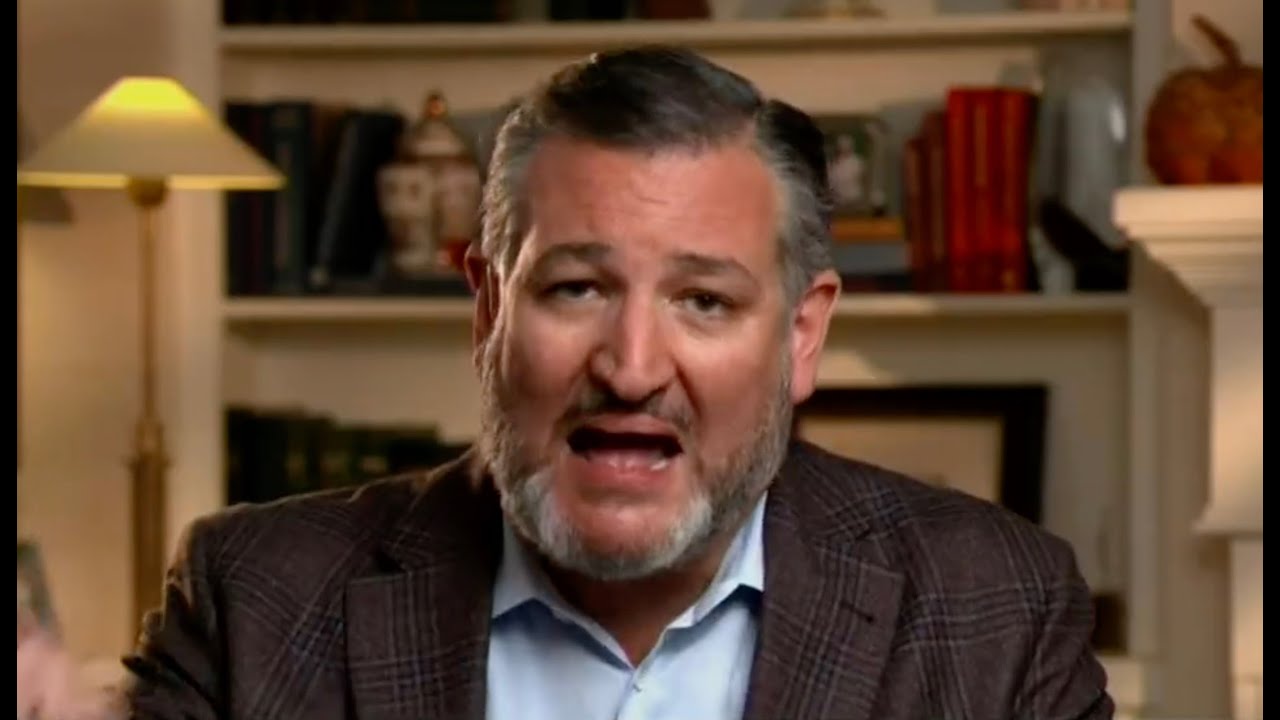

Sen. Ted Cruz is making a bold prediction about the future of the Democratic Party, arguing that its increasingly influential progressive wing is on track to reshape the party’s leadership over the next several years.
Speaking during an appearance on Fox News’ “Hannity” and later sharing his comments on X, the Texas Republican predicted that Rep. Alexandria Ocasio-Cortez will launch a presidential campaign in 2028, while New York City Mayor Zohran Mamdani will eventually replace Senate Minority Leader Chuck Schumer in the U.S. Senate.
Cruz suggested the Democratic Party is undergoing a significant ideological shift that extends far beyond a single election cycle.
His sharpest comments were directed at Schumer, whom Cruz argued no longer represents the direction of Democratic primary voters in New York.
According to Cruz, Schumer’s political future has become increasingly uncertain as younger, more progressive candidates gain influence within the party. He even joked that Schumer could become one of the first supporters of an Ocasio-Cortez presidential campaign if it meant avoiding a primary challenge from the party’s left.
Cruz ultimately predicted that Schumer’s lengthy career in New York politics is nearing its conclusion.
His broader argument centered on what he described as the growing influence of democratic socialist politicians within the Democratic Party.
Cruz pointed to Ocasio-Cortez as the likely standard-bearer of that movement on the national stage while describing Mamdani as one of the party’s fastest-rising figures in New York politics.
According to Breitbart News, Cruz argued that Ocasio-Cortez is more likely to pursue the presidency than a Senate seat, creating an opening for Mamdani to seek Schumer’s position.
Cruz went even further by describing Mamdani as the most powerful Democrat in the country, arguing that the party’s progressive wing has evolved from an outspoken faction into one that increasingly drives the party’s agenda.
While acknowledging that political parties naturally disagree over taxes, regulation, and spending priorities, Cruz argued that the current ideological divide extends beyond ordinary policy debates.
He warned that he believes parts of the modern progressive movement have become increasingly hostile toward free enterprise, religious Americans, and traditional institutions.
Cruz said he would prefer to see two major political parties that fundamentally love the country even while disagreeing about policy. His concern, he explained, is that the Democratic Party could eventually nominate candidates whose governing philosophy represents a much more dramatic departure from that tradition.
The senator emphasized that Republicans should not become complacent simply because they believe Democrats are moving too far left.
Political power in the United States regularly changes hands, Cruz noted, meaning Republicans cannot assume they will remain in the majority indefinitely.
Recent polling suggests Ocasio-Cortez has emerged as one of the Democratic Party’s most prominent potential 2028 contenders.
A survey conducted by the University of New Hampshire Survey Center found Ocasio-Cortez leading a prospective Democratic primary field among likely New Hampshire primary voters with 22 percent support. Former Transportation Secretary Pete Buttigieg followed closely at 21 percent, while Sen. Mark Kelly, California Gov. Gavin Newsom, Sen. Bernie Sanders, and former Vice President Kamala Harris trailed further behind.
Another national survey conducted by Emerson College Polling showed a more competitive race but still placed Ocasio-Cortez among the leading contenders. In that poll, Buttigieg led with 19 percent, followed by Newsom at 17 percent, while Ocasio-Cortez and Sen. Jon Ossoff each received 13 percent support.
Neither Ocasio-Cortez nor Mamdani has announced plans to seek higher office in 2028. Ocasio-Cortez has remained publicly focused on the upcoming midterm elections, while Mamdani has not indicated he intends to challenge Schumer for the Senate.
For now, Cruz’s comments remain a political forecast rather than a prediction grounded in announced campaigns. Still, they reflect a broader debate unfolding within the Democratic Party as longtime establishment figures face growing pressure from a younger progressive movement eager to play a larger role in shaping the party’s future.
Leave a Comment