
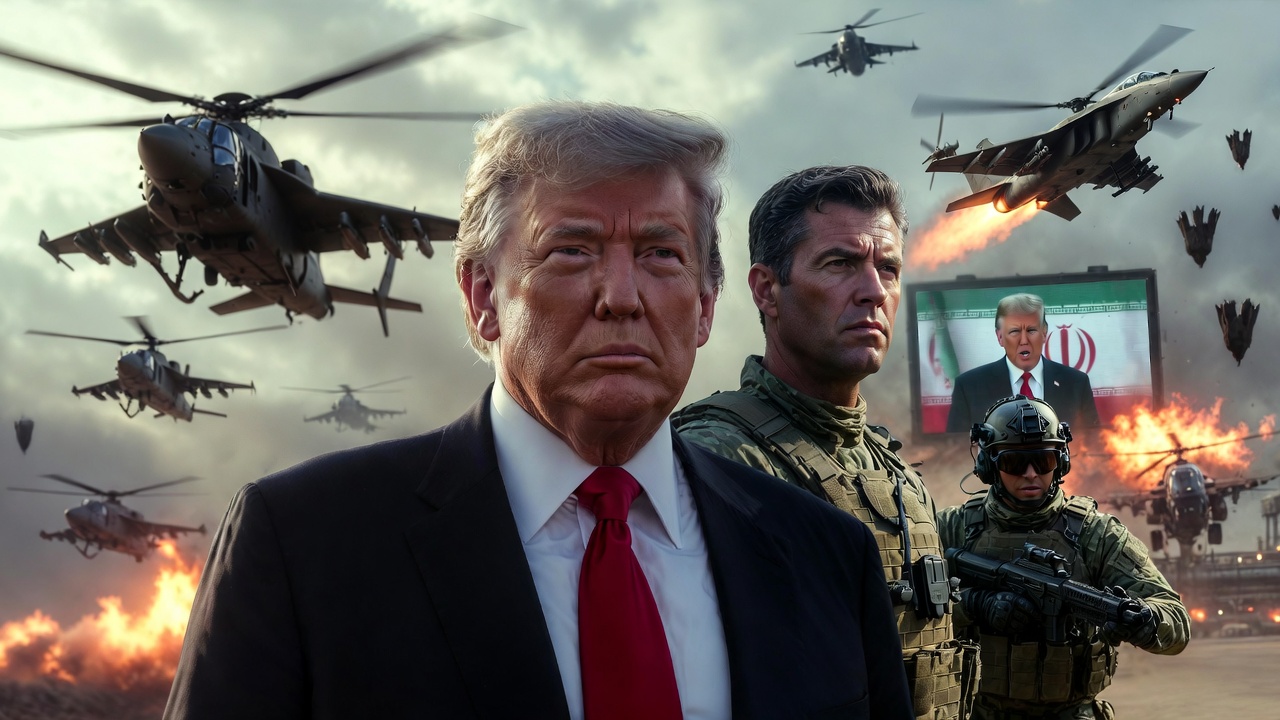

Tensions between the United States and Iran appear to be escalating rapidly, with President Trump issuing a stark warning that any future attack on commercial shipping in the Strait of Hormuz will be met with direct strikes against Iranian infrastructure.
According to the information provided, President Trump announced Wednesday that the United States would destroy one Iranian bridge or power plant for every ship attacked by Iran in the strategically vital waterway. The warning represents one of the strongest public threats yet aimed at deterring additional attacks on international shipping through one of the world’s most important energy corridors.
In a message posted on Truth Social, President Trump declared that any missile, rocket, drone, or other attack launched by the Islamic Republic of Iran against a vessel in the Strait of Hormuz would trigger an immediate American military response.
“From this point forward, any time the Islamic Republic of Iran shoots at a ship in the Strait of Hormuz, whether it be by Missile, Rocket, Drone, or any other device or weapon, the United States will bomb and destroy ONE BRIDGE OR POWER PLANT, including those located next to, or in, the Capital City of Tehran,” President Trump wrote.
The warning followed reports that Iran had attacked a tanker near the coast of Oman earlier in the week. At the same time, Iran-backed Houthi forces in Yemen were reported to have imposed a naval blockade around the Bab el-Mandeb Strait, another critical maritime chokepoint connecting the Red Sea and the Gulf of Aden. Any prolonged disruption to shipping through either passage could have significant consequences for global energy markets and international trade.
The rhetoric from Tehran was equally forceful.
Iranian Parliament Speaker Bagher Ghalibaf responded by warning that if Iran could not export its oil, no one else in the region would either. He also suggested that American forces were responsible for instability in the region, arguing that security in the Strait of Hormuz depended on their absence.
Iranian Foreign Minister Abbas Araghchi echoed that position with an unmistakable warning of retaliation.
“Our defense doctrine is clear: eye for an eye,” Araghchi said, adding that any attack on Iranian infrastructure would result in what he described as a “powerful and decisive response.” He further warned that countries assisting the United States could also face consequences.
Additional reports indicated that Iranian officials threatened to target bridges, energy facilities, and other infrastructure connected to American interests throughout the region if U.S. strikes expanded. Iranian military officials also reportedly stated that commercial ships would only be considered safe if they coordinated with Iranian authorities while operating within what Tehran described as its regulations for passage through the Strait of Hormuz.
Meanwhile, military operations appear to be continuing.
According to U.S. Central Command, American forces conducted an 11th consecutive night of strikes against Iran, releasing video footage of the latest attacks. Those operations reportedly came amid continued concerns over Iran’s military capabilities and regional activities.
President Trump also indicated that additional targets could soon be considered. During remarks from the Oval Office, he referenced Pickaxe Mountain, a location reportedly tied to Iran’s nuclear program according to Israeli intelligence.
“We’ll be hitting that area very, probably pretty soon. And there’s not a thing they can do about it,” President Trump said.
The latest exchange of threats highlights just how quickly the confrontation appears to be intensifying. Military operations, warnings of retaliation, and competing declarations from Washington and Tehran have all raised the stakes in an already volatile region.
Whether these warnings remain rhetorical or develop into broader military action may depend on what happens next in the Strait of Hormuz, where every new incident now carries the potential for an immediate and significant response.
Leave a Comment