

Iraq’s decision to revive the long dormant Kirkuk-Baniyas crude oil pipeline is shaping up to be one of the biggest energy developments in the Middle East in years. The agreement, signed on July 17 during a U.S.-Iraq business summit at the U.S. Chamber of Commerce in Washington, D.C., is about far more than repairing an old pipeline. It represents a major effort to reshape global energy routes, reduce dependence on vulnerable shipping lanes, and strengthen economic cooperation between Iraq, Syria, and American companies.
The reconstruction agreement brings together Iraq’s Basra Oil Company and Syria’s Petroleum Company, while a U.S. led international consortium, including Chevron, is expected to handle much of the technical and financial work. Chevron also signed separate preliminary agreements aimed at increasing production from Iraqi oil fields, making the company a central player in Iraq’s expanding energy sector.
According to the State Department, the restored pipeline will initially be capable of transporting 2 million barrels of crude oil per day from northern Iraq to Syria’s Mediterranean port of Baniyas. Officials described the project as “a critical energy corridor linking Iraqi oil production to Mediterranean export markets and beyond.” Earlier reports suggested the line could eventually carry between 2 million and 2.5 million barrels per day after rehabilitation is complete. The project is expected to take two to three years and could cost between $4 billion and $8 billion.
The timing is hardly accidental. Since tensions involving Iran intensified earlier this year, governments across the region have been looking for ways to move oil without relying so heavily on the Strait of Hormuz. That narrow waterway remains one of the world’s most strategically important shipping routes, but it has also become one of the most vulnerable.
U.S. Ambassador to Turkey Tom Barrack underscored the significance of these new pipeline projects by saying Iraq’s latest agreements would create a program “that will make the Strait of Hormuz an afterthought.” That is a bold statement, but it reflects a growing effort to diversify export options before another regional crisis disrupts global energy markets.
Iraqi Prime Minister Ali al-Zaidi made it clear his government is actively seeking outside investment. He described Iraq’s strategy as an “open-door policy,” adding, “Everybody who has a project can come and talk to us. We will not make it difficult for anyone.” He also characterized the U.S. relationship as “the most important strategic partnership in the world,” while adding, “It’s not emotional; it’s about money.”
That practical attitude appears to be paying off. The pipeline agreement is only one part of a broader package of preliminary deals valued at more than $60 billion involving American companies. Major firms including Chevron, ExxonMobil, Shell, ConocoPhillips, Halliburton, HKN Energy, and Starlink all participated in agreements covering energy, infrastructure, healthcare, and technology.
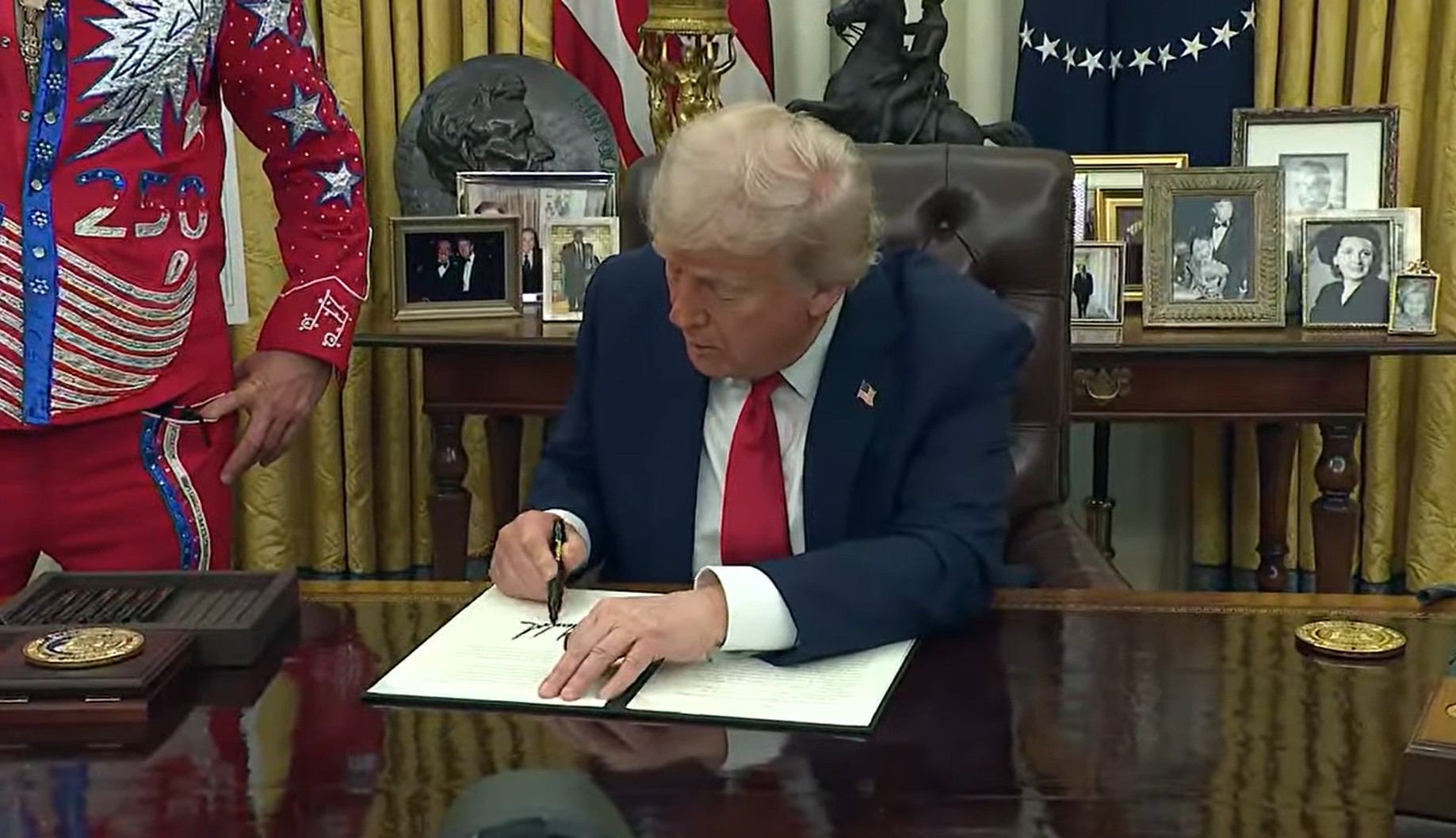
President Trump welcomed Prime Minister al-Zaidi to the White House during the visit and highlighted Iraq’s vast oil reserves along with the opportunities for expanded economic cooperation between the two countries. The administration has consistently promoted American investment abroad when it strengthens U.S. businesses while helping partners develop strategic industries.
The Kirkuk-Baniyas project also fits into a broader regional trend. Saudi Arabia continues operating its East-West Pipeline to the Red Sea at elevated levels, while the United Arab Emirates relies on the Habshan-Fujairah pipeline to bypass the Strait of Hormuz. Iraq is also working to restart the Kirkuk-Ceyhan pipeline to Turkey, with additional discussions underway involving possible future routes through Jordan, Oman, or even Egypt.
Energy security has become just as important as energy production. By creating more export routes and reducing dependence on a single maritime chokepoint, Iraq and its partners are betting that infrastructure can provide both economic growth and greater stability in an increasingly uncertain region.
Leave a Comment